The Broken Build Archaeologists: How Mis-Leveling Companions Is Unearthing Story Content Developers Buried in the Code
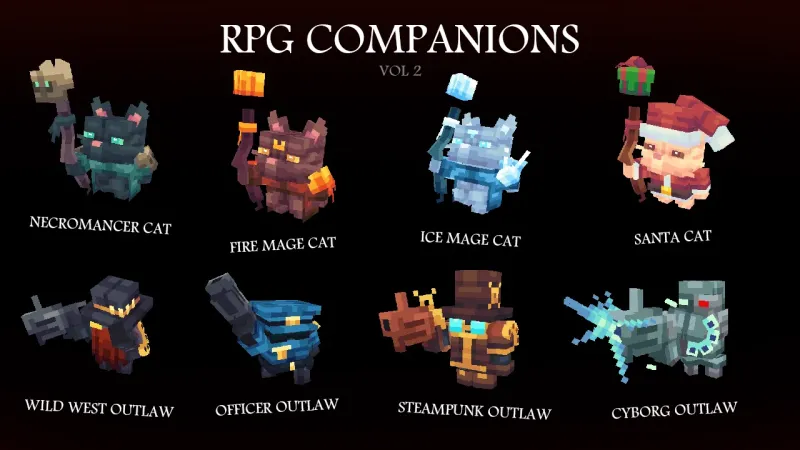
Photo: RPG companion character build official, via mcmodels.net
There's a moment in a lot of RPGs where the game looks at your companion build and gently tells you that you're doing it wrong. Maybe it's a stat warning. Maybe it's a party advisor NPC shaking their head. Maybe it's just the skill tree visually turning red when you try to dump points somewhere they weren't meant to go. The implicit message is always the same: this path leads nowhere good. Turn back.
A growing community of players has decided to keep walking anyway. And what they're finding on the other side of those warnings is, depending on your perspective, either a fascinating archaeological dig into the development history of modern RPGs — or a quiet indictment of how much story gets left behind when games ship.
The Discovery: Builds That Weren't Supposed to Exist
The origin story here is messier than a single eureka moment. Across multiple Discord servers and subreddits dedicated to RPG sequence-breaking and datamining, players had been independently noticing something odd: certain companion dialogue trees that appeared in the game's code had no obvious trigger condition in normal play. They existed. They had voice lines recorded, text strings written, condition flags set. But no standard playthrough — no matter how thorough — ever seemed to surface them.
The breakthrough came when players started cross-referencing these orphaned dialogue states against companion skill configurations. What they found was that several of these "dead" branches had trigger conditions tied not to story progress or player choices, but to specific companion stat distributions — distributions that the game's own systems actively discouraged or prevented through soft-lock warnings and UI friction.
In other words: build your companion the way the game tells you not to, hit a specific (and often bizarre) combination of stat thresholds, and the game's dialogue engine suddenly has access to content it never expected you to reach.
The community started calling these "ghost builds" — configurations so far outside the intended design space that the game's conditional logic essentially forgot to lock the door behind them.
What's Actually In There
The content these ghost builds unlock falls into a few distinct categories, and they're all interesting for different reasons.
The most common discovery is orphaned dialogue branches — conversations between the player character and a companion that appear to have been written for a version of the relationship that was significantly revised before launch. These aren't just a line or two. In several documented cases, players have uncovered multi-stage dialogue trees representing entire relationship arcs that were cut — companion backstory revelations, romantic subplot branches, and in at least one widely-shared example, a companion confrontation scene that directly contradicts the character's shipped personality in ways that suggest a significant late-development rewrite.
The second category is scrapped story beats — moments where a companion reacts to main-quest events in ways that don't match the final game's narrative. These are particularly revealing because they sometimes reference plot points that don't exist in the shipped game, suggesting they were written for an earlier version of the story. Players cataloguing these have essentially stumbled into a partial record of the game's development history — a ghost of a different version of the story that almost made it out.
The third category is the one that's generating the most buzz: developer debug conversations. These are dialogue states that were clearly never intended as player-facing content — internal test scripts, placeholder lines, and in a handful of cases, what appear to be developer-to-developer notes written in character that were never stripped from the final build. The community has been careful about how it shares these, since some contain what look like genuine internal commentary, but the existence of this material in shipped games has raised real questions about QA processes and content auditing.
The Discord Communities Doing the Work
The people cataloguing all of this aren't professional developers or academic researchers. They're players — often deeply obsessive ones — who've built remarkably sophisticated workflows for this kind of content archaeology.
The largest active community working in this space operates across several interconnected Discord servers, with different channels dedicated to specific titles and specific companion characters. The methodology is more rigorous than you might expect: discoveries require independent verification from at least two other members before they're added to the master documentation, and all findings are logged with build version numbers and platform specifics to account for the possibility that some content varies between versions.
The community has also developed a shared taxonomy for classifying what they find. "Tier 1" discoveries are orphaned dialogue with full voice acting — the most complete and clearly intentional content. "Tier 2" is text-only branches with full conditional logic. "Tier 3" is partial or clearly incomplete content, flagged as potentially unfinished rather than deliberately cut. It's a level of organizational discipline that would be at home in a legitimate archival project.
What's striking about talking to people in these communities is how seriously they take the preservation angle. For many of them, this isn't about breaking the game for bragging rights — it's about recovering narrative content that would otherwise be lost. "This stuff exists," one long-time community member put it in a thread that got widely shared. "Someone wrote it. Someone recorded it. It deserves to be documented."
The Bigger Question: What Does 'Broken' Actually Mean?
There's a genuinely interesting design philosophy question sitting at the center of all this. If a companion build the game warns you against produces more narrative content than the intended build — more dialogue, more character depth, more story — is it actually the broken one?
The intended builds are optimized for combat performance and narrative coherence as the developers shipped it. The ghost builds are optimized for nothing the game values, but they apparently preserve significantly more of the game's developmental history. They're a window into a version of the story that was revised, cut, or abandoned — and in some cases, players who've worked through the ghost build content have argued that what they found was better than what shipped.
That's a complicated claim to evaluate. Some of the cut content clearly was cut for good reasons — unfinished arcs, pacing problems, tonal inconsistencies. But some of it is polished, emotionally coherent, and narratively rich in ways that make its absence from the final game feel like a genuine loss.
What the broken build archaeologists are doing, whether they'd frame it this way or not, is performing a kind of unintentional preservation work. They're documenting the gap between the game that shipped and the game that almost was — and they're doing it through a method nobody at the studio anticipated or designed for.
The next time the game tells you that you're leveling your companion wrong, maybe ask yourself what it's trying to hide.
Bottom line: The wrong companion build isn't just a quirky exploit — it's become one of the most unexpectedly rich methods of narrative archaeology in the RPG community, and the communities doing this work are preserving story content that would otherwise disappear entirely.