Shipped Empty: The 2026 Games That Launched With Placeholder Content — And the Players Who Got Stuck Grinding It
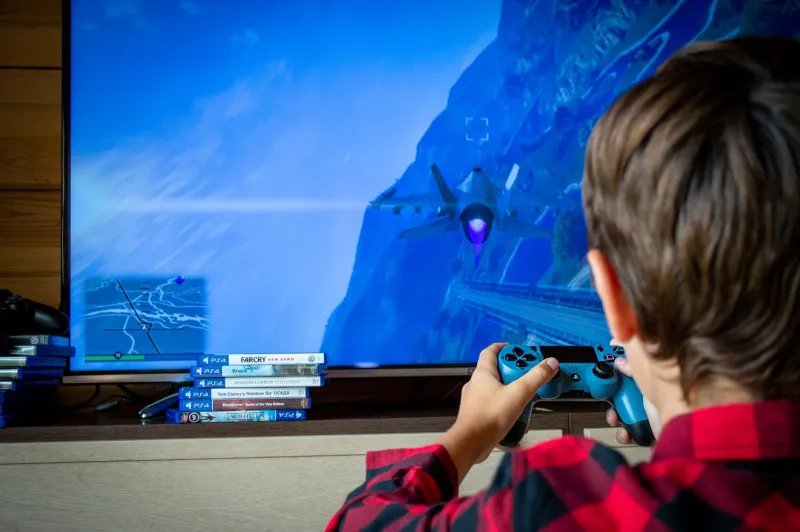
You paid full price. You pre-loaded the night before. You carved out your weekend. And somewhere around hour six, you walked into a zone that had the geometry, the lighting, and the ambient sound design of a finished game area — but no quests, no vendors, no enemies worth fighting, and a single floating UI element that said, in clean sans-serif font: Content Coming Soon.
This is the part of the 2026 release calendar nobody put in the marketing materials.
The incomplete launch isn't new. But the scale, the visibility, and the audacity of what's shipping broken — or more precisely, what's shipping empty — in 2026 has reached a point where it warrants naming directly. Not as a gotcha, and not to pile on studios that are clearly under impossible pressure. But because players deserve an honest accounting of what they're actually buying, and right now, the gap between what's being sold and what's being delivered is significant enough to affect real purchase decisions.
What 'Incomplete' Actually Looks Like in 2026
There's a spectrum here, and it's worth being precise about it. On one end, you have the familiar live-service model — games designed from the ground up to expand over time, where a smaller content offering at launch is part of an explicit and publicly communicated roadmap. Players who buy into these titles understand the deal, or at least they should.
What's different in 2026 is the number of games that don't fit that description — titles marketed as complete, standalone experiences, or at minimum as fully formed live-service launches — that are arriving with structural gaps that don't read as 'room to grow' so much as 'we ran out of time.'
The tells are consistent across multiple releases this year. Empty hub zones with no population density and placeholder NPC behavior. Crafting systems with recipe slots that exist in the UI but are locked behind a 'future update' flag. Faction questlines that end abruptly with a cutscene that resolves nothing and a journal entry that says the story will continue. Endgame activity tabs populated with greyed-out icons and estimated availability windows that, in several cases, have already slipped past their initial projections.
This isn't the game being unfinished in the sense of being unplayable. These are games that work. They launch, they run, they provide a certain number of hours of content. But the scaffolding for content that was presumably planned — and in some cases, was shown in pre-release marketing — is visible inside the shipped product, empty and waiting.
The Crunch Math Nobody Wants to Do Out Loud
The industry context here isn't complicated, even if it's uncomfortable. The 2026 release calendar has been shaped by a multi-year backlog of titles that were delayed out of 2024 and 2025 — some because of genuine development challenges, some because of the post-pandemic recalibration of production timelines, and some because publishers were waiting for the market to stabilize after a brutal 18 months of studio closures and layoffs.
That backlog created enormous pressure to ship. Fiscal year deadlines don't move for development schedules, and in multiple documented cases this year, games have launched in a release window that served the publisher's quarterly reporting needs rather than the product's actual readiness. The people making these games know this. Many of them have said as much, carefully and off the record, to anyone who's asked.
What gets compressed when a release date is fixed and a team is running behind? Not the parts of the game that show up in review code. The vertical slice — the opening hours, the primary quest chain, the showcase content that generates the launch-window review scores — gets finished. The stuff that was supposed to fill out the middle game and give the experience depth beyond the first weekend? That's what ends up as a 'coming soon' flag in a zone players weren't supposed to notice until they'd already put in forty hours.
The Roadmap as a Coping Mechanism
The post-launch roadmap has become the industry's standard response to incomplete launches, and it's worth interrogating what that document actually is at this point.
In the best cases, a roadmap is a genuine commitment — a transparent, dated schedule of content additions that reflects real production progress and gives players meaningful information about what they're buying into. Several studios have delivered on roadmaps in good faith this year, and those titles have generally recovered their communities' trust after rocky launches.
In the worst cases, a roadmap is a marketing document designed to redirect the conversation away from what's missing at launch toward what might arrive later. The tell is specificity: roadmaps that list content by name and date are making a real commitment. Roadmaps that describe 'new story content,' 'additional endgame activities,' and 'quality of life improvements' in a colorful graphic with seasonal labels but no dates are doing something else entirely. They're asking players to extend trust that hasn't been earned yet.
The community response to incomplete launches in 2026 has been sharper and faster than in previous years, partly because players have better tools for comparing shipped content against pre-release marketing materials, and partly because the pattern has repeated enough times that audiences have developed a justified institutional skepticism. Pre-release footage gets screen-capped. Zone layouts get compared against shipped builds. Missing systems get catalogued in community spreadsheets within the first week.
Who's Responsible for Fixing This?
The honest answer is everyone, which is another way of saying the structural incentives that produce incomplete launches aren't going to be addressed by any individual studio's good intentions.
Publishers need to stop treating release dates as fixed points that development must bend around. Reviewers — including this site — need to weight launch-state completeness more explicitly in coverage, rather than reviewing the content that's there and footnoting what's missing. Players need to use the most powerful tool they have, which is buying games after the first patch cycle rather than at launch, and letting that purchasing pattern communicate something the industry actually listens to.
And studios need to be honest — publicly, explicitly, in the patch notes and the community posts and the developer updates — about what shipped and what didn't. Not as spin. As information.
The players grinding through placeholder content in 2026 aren't asking for perfection. They're asking for honesty about what they bought. That's not a high bar. It just requires treating customers like adults.
Bottom line: Shipping empty is a choice, and in 2026, players are getting very good at recognizing when it's been made — which means studios that keep making it are burning through goodwill they won't be able to earn back with a roadmap graphic.