Let the Boss Win First: The 'Death-Tuning' Strategy That's Quietly Breaking Modern Action RPGs
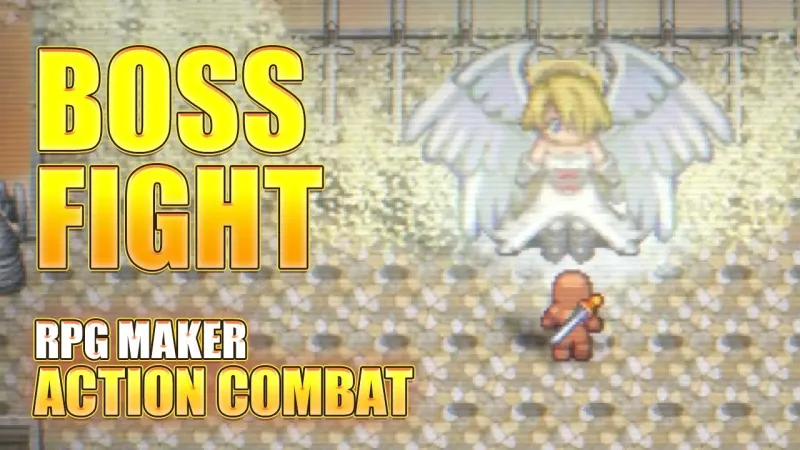
Photo: action RPG boss fight official, via i.ytimg.com
Let the Boss Win First: The 'Death-Tuning' Strategy That's Quietly Breaking Modern Action RPGs
What if the most powerful thing you can do at the start of an action RPG is walk into the first major boss fight with zero gear, zero skills, and absolutely no intention of winning? A growing number of players have discovered that taking repeated, unmitigated damage from specific early-game enemies before acquiring any upgrades triggers adaptive difficulty flags buried in back-end scaling systems — permanently lowering enemy damage output for the entire run. It's called death-tuning, and the community is divided on whether it's genius or just broken.
I'm going to go ahead and say it's both.
What Death-Tuning Actually Is
Let's be precise about the mechanic before we get into the debate, because a lot of the community discourse around death-tuning conflates it with standard adaptive difficulty — and they're not the same thing.
Most modern action RPGs and action-adjacent titles include some form of adaptive difficulty in their back-end systems. This is a well-documented, widely discussed feature — the game monitors your performance over time and makes subtle adjustments to enemy aggression, damage output, and health pools to keep the experience within an intended challenge range. Developers talk about this openly. It's an accessibility feature, a retention tool, and a pacing mechanism all at once. Nobody is hiding it.
Death-tuning is different. It's not about the game adapting to your performance over time. It's about exploiting the initialization of the adaptive difficulty system — specifically, the way the system calibrates its baseline during the first few encounters of the game.
Here's how it works in the confirmed cases: the adaptive difficulty system sets its baseline damage modifier by sampling the player's incoming damage during the opening section of the game, before any gear or skill upgrades are acquired. The logic is sound in theory — the system wants to know how much raw damage the player can absorb before it starts making adjustments. But the sampling window is fixed, and the resulting baseline modifier is applied globally for the rest of the run.
If you walk into that sampling window with no gear and no skills and let the boss hit you repeatedly — absorbing maximum unmitigated damage — the system concludes that you are a player who is absorbing enormous amounts of damage and adjusts the baseline modifier downward accordingly. Enemy damage output drops. And it stays dropped, because the baseline was set during initialization and doesn't recalibrate in most confirmed titles.
The result: players who deliberately take unmitigated hits in the opening section of the game are running the rest of it against enemies whose damage output has been permanently tuned down by the accessibility system. It's not a glitch. The code is doing exactly what it was designed to do. It's just doing it in response to inputs the developers didn't anticipate.
The Titles Where This Has Been Confirmed
I want to be careful here, because the community's documentation on this is still evolving and not every claimed example has been rigorously verified. The methodology for confirming death-tuning in a specific title requires either datamined access to the adaptive difficulty code or a controlled in-game test comparing the damage output of specific enemies across two otherwise identical runs — one with standard opening play and one with deliberate death-tuning in the initialization window.
Both methodologies have significant margins for error, and some of the community's early 'confirmed' cases have since been disputed or walked back. With that caveat in place: as of early 2026, the community has what it considers credible evidence of death-tuning being viable in several action RPG titles released in the last three years, across multiple platforms. The pattern appears most reliably in titles that use a unified adaptive difficulty system rather than separate difficulty settings — meaning games that don't offer a traditional Easy/Normal/Hard menu, but instead present a single 'intended experience' and adjust dynamically in the background.
Those titles tend to have the most aggressive adaptive difficulty sampling windows, because the system is doing more work — it can't rely on a player-selected difficulty setting to establish a baseline, so it has to derive one from early gameplay data. That derivation process is where death-tuning lives.
Why Developers Don't Disclose This
This is the part of the conversation that I find genuinely fascinating, and it's where my opinion starts to color the analysis.
Developers don't disclose adaptive difficulty systems in detail for a specific and understandable reason: the moment players know the system exists, a significant portion of them will start trying to game it. The system's effectiveness depends on players not knowing it's there. If you know the game is watching your early performance and adjusting accordingly, you immediately start performing differently — and the system's calibration becomes unreliable.
This is a legitimate design concern. Adaptive difficulty is one of the most effective tools modern developers have for managing the gap between their most and least experienced players, and it works precisely because it operates transparently. Disclosing the sampling window and the initialization methodology would undermine the system for the majority of players in order to satisfy the curiosity of a minority.
But here's the tension: by not disclosing it, developers are also leaving a significant mechanical exploit undocumented in their games. Players who discover death-tuning through community research gain a permanent advantage over players who don't know the system exists. That's not a neutral outcome, and it's worth naming as such even if you understand why developers make the choice they make.
Is It Cheating? Let's Actually Argue This Out
The community is genuinely split on this, and I think both sides have legitimate points.
The 'it's not cheating' argument goes like this: death-tuning doesn't require external tools, doesn't modify game files, and doesn't exploit a coding error. It's a player interacting with a system the developer built and shipped. The adaptive difficulty system is functioning correctly — the player is just feeding it inputs the developer didn't anticipate. If the developer didn't want players to trigger this behavior, they should have built a sampling window that couldn't be gamed. The responsibility for the exploit's existence sits with the design, not the player.
The 'it is cheating' argument goes like this: the adaptive difficulty system was built for a specific purpose — to help players who are genuinely struggling. Death-tuning is using an accessibility feature to gain a competitive advantage it was never designed to provide. It's instrumentalizing a system meant to help people who need help, and using it to make an already manageable game easier for players who are capable of playing it at full difficulty. That's not clever play. That's exploiting a social contract.
I find the second argument more emotionally resonant, but the first argument more mechanically accurate. And in the context of single-player games — which is where death-tuning is primarily being discussed — I'm not sure the social contract argument holds up as strongly as it does in a competitive multiplayer context. Nobody's leaderboard is being affected. No other player is being disadvantaged. You're just running your single-player action RPG against slightly less damaging enemies because you fed the back-end system a specific set of inputs during the opening section.
Is that the intended experience? No. Is it cheating? I genuinely don't think so — but I understand why people feel differently.
How to Actually Do It
If you've read this far and you want to try death-tuning in a title you suspect carries the system, the methodology is straightforward in principle, if imprecise in practice.
The goal is to maximize incoming damage during the first major boss encounter — or the first extended combat encounter if the game doesn't have a structured boss fight early on — while carrying as little gear and as few active skills as possible. This means not equipping any gear the game provides during the tutorial section, not activating any skill or ability upgrades before the encounter, and not using consumables that would reduce incoming damage.
During the encounter itself, you want to absorb hits rather than dodge or block them. The system is sampling raw incoming damage, and mitigation mechanics — dodges, blocks, parries — reduce the damage value the system records. You want the system to see maximum unmitigated hits.
Die. Die again. Die a few more times. Then, once you've established your baseline, equip your gear, unlock your skills, and play the game normally. If the title carries the system, you should notice enemy damage feeling noticeably lower than community benchmarks from the first major post-tutorial area onward.
If it doesn't feel different, the title probably doesn't carry the system in the form the community has documented. Not every game does this. The research is still ongoing.
The Bottom Line
Death-tuning is one of the most counterintuitive strategies to emerge from the community in recent memory — the idea that losing on purpose, repeatedly, with no gear, is the optimal opening move in an action RPG runs against every instinct the genre has spent decades building in its players. But the mechanical logic is sound, the community evidence is credible, and the number of titles where it appears to work is growing. Whether you think it's brilliant or borderline, it's worth knowing it exists — because the back-end systems shaping your game's difficulty were never as neutral as the developers wanted you to believe.