The Faction Lock Trap: How Choosing the 'Right' Allegiance in RPGs Actually Cuts You Off From the Game's Most Powerful Progression Path
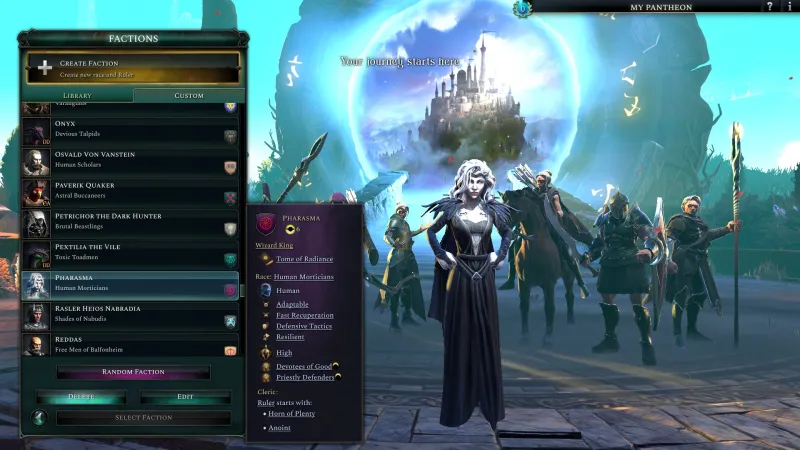
Photo: RPG faction choice official, via forumcontent.paradoxplaza.com
The Faction Lock Trap: How Choosing the 'Right' Allegiance in RPGs Actually Cuts You Off From the Game's Most Powerful Progression Path
Every major RPG hands you a faction choice early on, and most players pick the obvious 'good guys' — then spend the rest of the game wondering why their build feels slightly underpowered. It turns out that's not a coincidence. Developers have been quietly loading the antagonist and outcast factions with the game's most broken gear trees, hidden crafting blueprints, and gated endgame content for years. And the community is finally catching on.
The Design Is Deliberate — And It's Older Than You Think
Here's the thing about faction systems in RPGs: they're not just narrative tools. They're progression gatekeepers dressed up as moral choices. The studio presents you with a clean, well-lit faction full of heroic archetypes and easy-to-follow quest markers, and then buries the mechanically superior path inside the faction that looks like the wrong answer.
This isn't accidental design. It's what game theorists sometimes call asymmetric reward architecture — where the surface-level appeal of one path is deliberately inflated to funnel the majority of players away from content that would break the game's intended difficulty curve. The 'good' faction gets the better story beats, the more sympathetic NPCs, and the cleaner UI integration. The 'bad' or overlooked faction gets the crafting recipes that cap out 15% higher, the armor sets with hidden passive modifiers, and the merchant who sells endgame-tier consumables from Act Two onward.
It's been a staple of the genre for decades, but the sophistication of the technique has grown considerably as RPGs have gotten bigger, more systems-heavy, and more reliant on community engagement to sustain their post-launch lifecycle.
The Popular Path Is a Soft Ceiling
Let's talk about what 'popular faction' actually means in mechanical terms. When developers load-test their games, they track which faction the majority of players choose during internal playthroughs and beta periods. That faction almost always ends up receiving the most narrative polish, the smoothest quest flow, and — critically — a progression curve that's been tuned to feel satisfying without ever becoming overpowered.
The result is a faction that feels strong because the game is constantly validating your choices, but is actually operating inside a carefully managed ceiling. You're never struggling, but you're also never breaking anything. That's the trap. The game is keeping you comfortable.
The overlooked faction, meanwhile, often has rougher quest design, less hand-holding, and NPCs who speak in clipped, transactional dialogue — because fewer internal testers spent time there. But the loot tables weren't tuned to the same ceiling. The crafting trees weren't nerfed in the same late-stage balance passes. And the gear that drops from faction-exclusive bosses wasn't flagged as 'too strong' because not enough people were testing that content to notice.
How to Spot the Broken Faction Before You Commit
You don't need a datamine to identify the mechanically superior faction before you lock in. There are a handful of reliable tells that show up consistently across the genre.
The Merchant Test. Before you commit to any faction, find the faction-exclusive vendors for each side and compare their inventory tier. The faction whose merchant sells gear two to three levels above the current area's recommended level — especially early in the game — is almost always the one with the superior progression path. Developers often forget to scale these vendors down during balance passes because they're tucked behind quest flags that most players never trigger early.
The Crafting Blueprint Count. Faction-specific crafting recipes are one of the clearest indicators of where the real power sits. Pull up the crafting menu after completing each faction's intro quest and count the unique blueprints unlocked. The faction with fewer, more expensive blueprints is almost always the one with the higher stat ceilings — because those recipes were designed for players who were willing to grind for them, not the majority who'd follow the main path.
The Passive Modifier Audit. Faction allegiance in most modern RPGs grants passive stat modifiers that aren't prominently displayed in the UI. These are usually buried in the character sheet's secondary stats page or inside item tooltips. The 'good' faction passives tend to be straightforward — plus damage, plus defense, plus XP gain. The overlooked faction passives are where it gets interesting: conditional modifiers that trigger on low health, gear synergies that stack multiplicatively rather than additively, or hidden resistances that only activate in specific encounter types. These are the modifiers that enable the builds that break the game.
The NPC Dialogue Flag. This one sounds odd, but it works. If a faction's NPCs have dialogue that references 'forbidden,' 'stolen,' 'contraband,' or 'outlawed' techniques or items, that faction almost certainly has access to mechanics the developers considered pulling from the game during production. Content that nearly got cut is content that didn't get balanced.
The Psychology Behind the Choice Architecture
So why do developers keep doing this? Part of it is practical — the 'good' faction path gets more playtesting hours, so it gets more balance iterations. The overlooked faction is always slightly under-tuned because fewer people are stress-testing it. But there's also an intentional element that several developers have hinted at in GDC talks and design retrospectives.
The overlooked faction is a reward for players who read the room. It's a way of building in a second layer of mastery — a meta-game where the real skill isn't playing the game well, it's reading the game's design language well enough to know which choice is the mechanically optimal one before the consequences become clear. It's a signal to the community that the developers respect players who dig deeper than the surface presentation.
The problem is that most players — especially on a first playthrough — don't have the context to read those signals. They pick the faction that feels right narratively, lock in, and never discover what they missed. By the time the community has mapped out the superior faction's content, they're already 40 hours into a build they can't reverse.
The Practical Guide: Which Faction Is Secretly Broken?
Here's the short version for anyone who wants a quick reference before their next playthrough.
If the game presents you with a faction that is described as 'ruthless,' 'pragmatic,' 'mercenary,' or 'morally ambiguous' — and that faction has a shorter introductory quest line than its counterpart — pick it. Shorter intro quest lines mean less narrative investment from the development team, which almost always correlates with less balance scrutiny on the faction's gear and ability trees.
If the game presents you with a faction that is explicitly positioned as the villain's organization or the 'wrong' choice by the game's main story NPCs, check the faction's exclusive armor sets before you dismiss it. Villain-aligned factions in RPGs are routinely given the highest base stat ceilings in the game because developers want the endgame antagonists to feel threatening — and they build those NPC loadouts from the same gear tables the faction rewards to player characters.
And if you're ever unsure? Find the faction that the game's tutorial explicitly warns you against. That's almost always the one worth picking.
The Bottom Line
Faction systems in RPGs have always been about more than narrative allegiance — they're the genre's most elegant power-gating mechanism, and the 'right' choice is almost never the one the game wants you to make. If you've been loyally running the hero's path and wondering why your build never quite hits the numbers you see in community guides, now you know why. The broken content was always there. It was just waiting behind the faction you were told to avoid.