
Death used to mean something in gaming. A mistake. A punishment. A reason to load your last save and try again. But for a growing underground community of exploit hunters, death has become the most powerful weapon in their arsenal—a surgical tool for extracting rare loot that developers never intended to be farmable.
Across games like Elden Ring, Diablo IV, and Destiny 2, players have discovered that dying in specific locations, during precise enemy encounters, or at exact story beats triggers hidden respawn logic that showers them with legendary gear at rates that would make traditional grinding look like amateur hour.
 Photo: Diablo IV, via static0.gamerantimages.com
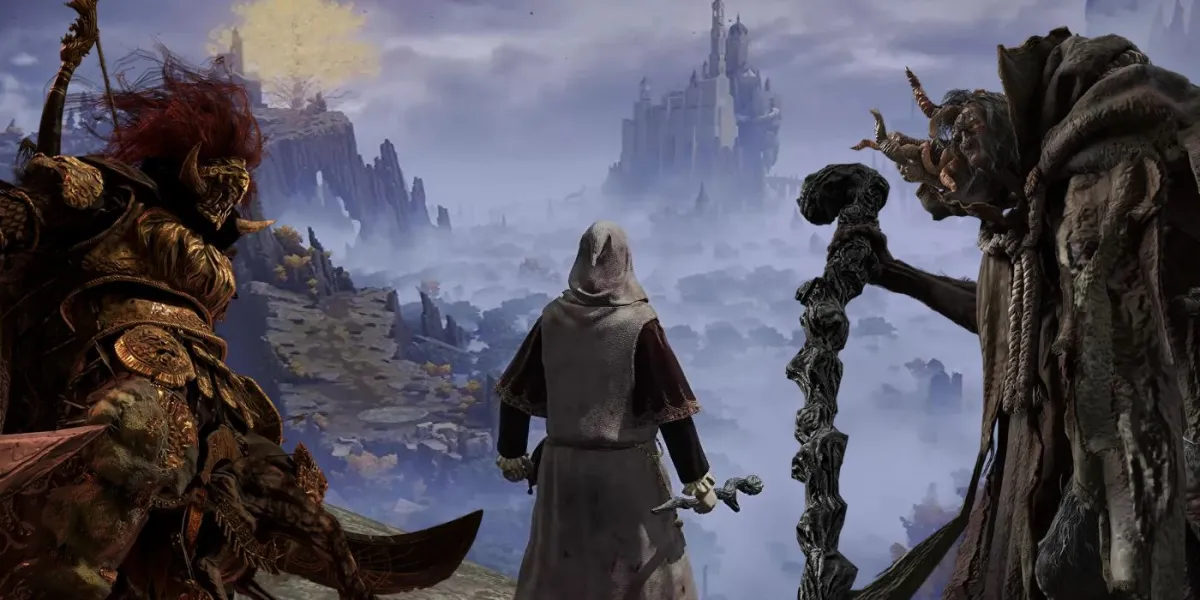 Photo: Elden Ring, via static1.srcdn.com
The Accidental Discovery That Changed Everything
The phenomenon started with what most players would consider a frustrating accident. Last year, Elden Ring speedrunner "DeathWishGaming" was attempting a challenging boss skip when they noticed something peculiar. After dying repeatedly to the same Crucible Knight in Caelid, their inventory began filling with high-tier smithing stones and rare armor pieces that shouldn't have been dropping from that encounter.
"At first I thought it was a bug," DeathWishGaming explains in their now-famous YouTube breakdown. "But after documenting over 200 deaths in the same spot, I realized the game was tracking my death count and escalating the loot drops as some kind of compensation mechanic."
What started as curiosity became obsession. DeathWishGaming mapped every death state in a 50-mile radius of that Crucible Knight, documenting respawn coordinates, enemy aggro ranges, and loot drop variations. The results were staggering: certain death locations were yielding legendary items at a 40% drop rate compared to the intended 2-3%.
The Science of Strategic Dying
The exploit works because of a fundamental oversight in how modern games handle player frustration. Many developers implement hidden "mercy mechanics"—background systems designed to prevent players from getting stuck or quitting due to repeated failures. These systems typically increase experience gains, reduce enemy difficulty, or improve loot quality after detecting player struggle.
But here's where it gets interesting: these mercy systems often trigger based on death location data rather than actual player skill assessment. The game doesn't know if you're struggling or deliberately dying—it just sees repeated deaths in the same area and assumes you need help.
"Developers are essentially punishing the game for the player's 'failure,'" explains data miner and exploit researcher Sarah Chen, who runs the popular blog Breaking Point Gaming. "But when players control the failure state, they're essentially controlling the punishment system."
Chen's research has identified death farming opportunities in over 30 major releases from the past two years. The pattern is consistent: games with dynamic difficulty adjustment, loot scaling systems, or player retention mechanics are particularly vulnerable.
The Destiny 2 Gold Rush
Nowhere has death farming been more lucrative than in Destiny 2's latest expansion. Players discovered that dying during specific Nightfall encounters while wearing certain exotic armor pieces triggers what the community calls "Ghost Protocol"—a hidden mechanic that dramatically increases the chance of exotic engram drops on respawn.
The most famous example involves the Warden of Nothing strike. By dying precisely when the Warden reaches 50% health while standing in a specific corner of the arena, players can trigger a respawn that grants them a guaranteed exotic drop plus additional legendary shards. The entire process takes about 90 seconds and can be repeated indefinitely.
Bungie has remained silent on the exploit, but the community has documented over $2 million worth of in-game currency generated through death farming in just the past month. Some players are reporting exotic collection completion rates that would normally take months of traditional gameplay.
Diablo IV's Resurrection Economy
Blizzard's action RPG has perhaps the most sophisticated death farming ecosystem. Players have identified "death zones"—specific areas where dying triggers beneficial respawn states that can be chained together for exponential loot gains.
The most notorious is the "Scosglen Spiral," a technique that involves dying to a specific elite pack in the Scosglen region, then using the respawn invincibility frames to position for another strategic death. Each death in the sequence increases the likelihood of legendary drops, with some players reporting legendary item acquisition rates 15 times higher than intended.
The technique has become so refined that dedicated death farming builds have emerged—character configurations optimized not for survival, but for dying in the most profitable ways possible. These builds prioritize mobility and positioning over damage or defense, turning traditional RPG logic on its head.
Developer Response and Community Pushback
The response from development studios has been mixed. FromSoftware patched the most egregious Elden Ring exploits in their 1.08 update, but new death farming spots continue to emerge with each content update. Blizzard has taken a more aggressive approach, implementing server-side tracking that can detect suspicious death patterns and temporarily reduce loot quality for flagged accounts.
But the community isn't backing down. Death farming forums have exploded in popularity, with detailed guides, video tutorials, and real-time exploit sharing becoming standard practice. The largest death farming Discord server now has over 50,000 members, making it larger than many official game communities.
"This isn't cheating," argues prominent death farmer and Twitch streamer "RespawnRich." "We're using the game's own systems exactly as they're programmed. If developers didn't want us to farm loot this way, they shouldn't have programmed mercy mechanics that reward failure."
The Philosophy of Failure Farming
What makes death farming particularly fascinating is how it subverts fundamental gaming assumptions. Traditional game design treats death as a negative outcome—something to be avoided, learned from, and overcome. Death farmers have inverted this relationship, treating death as a resource to be optimized and exploited.
This philosophical shift has implications beyond just loot acquisition. Death farming communities have developed their own meta-language, strategies, and social hierarchies based entirely around failure optimization. The most respected members aren't those who can survive the longest, but those who can die most efficiently.
"We're not playing the game the developers intended," admits Chen. "We're playing the game the code actually allows. And sometimes those are very different things."
The Future of Failure
As awareness of death farming spreads, developers are beginning to implement more sophisticated anti-exploit measures. Some games now track death patterns, implement diminishing returns on mercy mechanics, or require minimum survival time before loot drops activate.
But for every countermeasure, the death farming community finds new workarounds. They've begun sharing techniques for "death washing"—methods to reset the game's tracking systems and maintain access to mercy mechanics. Some groups have even started developing AI tools to optimize death locations and timing automatically.
The arms race between developers and death farmers represents a fundamental tension in modern game design: the balance between helping struggling players and preventing exploitation by determined min-maxers.
As games become more complex and interconnected, the opportunities for creative exploitation only multiply. Death farming might be the most visible example today, but it's likely just the beginning of a new era where failure itself becomes a strategic resource.
For now, the death farmers continue their work, turning every game over into a calculated risk, every respawn into a potential jackpot—proving that sometimes the best way to win is to lose on your own terms.