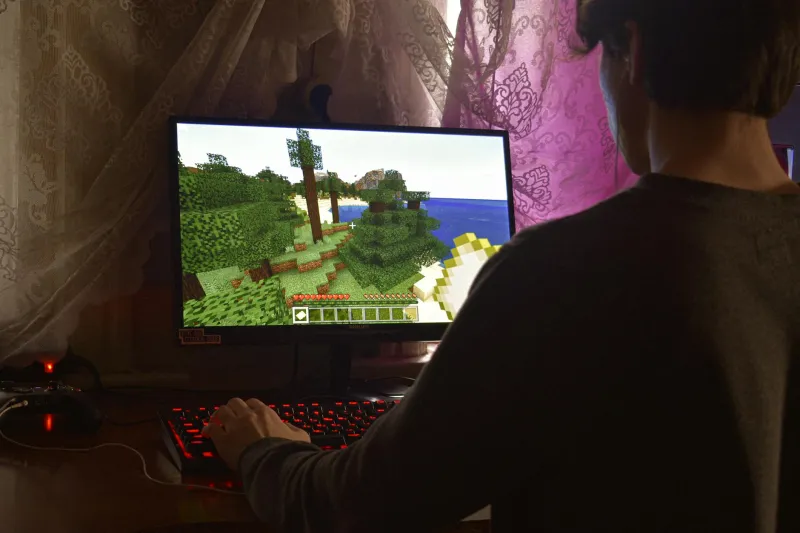
In the sprawling worlds of modern RPGs, players are constantly bombarded with exclamation marks, question marks, and glowing objective markers demanding their attention. But what happens when you ignore them all? As it turns out, some of gaming's biggest titles have been quietly rewarding digital hermits with content that the vast majority of players will never see.
The Anti-Social Experiment
The discovery began with The Witcher 3: Wild Hunt, where a small community of players noticed something peculiar. Characters who had never received help from Geralt would occasionally reference his "mysterious ways" and "selective nature" in ways that seemed oddly specific. Digging deeper, dataminers uncovered an entire faction system that tracks player apathy.
The "Neutral Path" faction only becomes available when players complete fewer than 15% of available side quests and contracts. This isn't just a missed opportunity counter – it's a deliberate narrative branch that fundamentally changes how NPCs perceive and interact with the player character.
"We wanted to acknowledge that not every hero needs to be everyone's problem-solver," explained former CD Projekt RED narrative designer Jakub Szamałek in a 2019 interview that took on new meaning once players cracked this system. "Sometimes the most powerful statement is what you choose not to do."
 Photo: Jakub Szamałek, via images.gr-assets.com
The Philosophy of Digital Apathy
This design philosophy extends far beyond The Witcher 3. Mass Effect 2 contains a hidden Paragon/Renegade hybrid path called "Pragmatic" that only unlocks when players consistently avoid optional loyalty missions while maintaining crew survival rates above 80%. The resulting ending sees Commander Shepard leading a more militaristic, efficiency-focused Normandy crew that treats the suicide mission as exactly that – a calculated risk rather than an emotional journey.
Similarly, Dragon Age: Inquisition features the "Absent Inquisitor" faction, which emerges when players focus solely on closing rifts and ignore companion quests, war table missions, and regional conflicts. This path transforms the Inquisition into a single-purpose organization that disbands immediately after defeating Corypheus, with unique epilogue slides showing a world that learned to solve its own problems.
The Technical Challenge
Implementing these shadow systems required sophisticated tracking mechanisms that monitor not just what players do, but what they deliberately avoid. Game developers had to account for players who might accidentally stumble into side content, creating complex algorithms that differentiate between intentional avoidance and natural gameplay flow.
Cyberpunk 2077, despite its troubled launch, contains one of the most elaborate anti-engagement systems ever created. The "Ghost Protocol" faction tracks players who avoid gigs, NCPD scanner hustles, and optional cyberware upgrades. V becomes known throughout Night City as someone who "gets the job done and disappears," unlocking unique vendor interactions and a completely different relationship with Johnny Silverhand.
 Photo: Night City, via i.pinimg.com
Breaking the Helper Complex
These hidden factions challenge the fundamental assumption that RPGs should reward completionist behavior. Traditional design wisdom suggests that more content equals better value, but these shadow systems argue that restraint can be its own form of player expression.
"We're essentially training players to be digital people-pleasers," argues game design critic Ian Bogost. "These hidden faction systems acknowledge that saying 'no' is a valid character choice that deserves mechanical recognition."
The community response has been mixed but passionate. Reddit's r/patientgamers has spawned entire threads dedicated to "minimalist runs," while speedrunners have begun incorporating selective apathy strategies into new categories of completion.
The Modern Implementation
Baldur's Gate 3 takes this concept even further with its "Focused Path" system, which rewards players who stick to the main quest by gradually increasing the power and agency of unused companions. Companions you never recruit begin making their own decisions in the world, sometimes solving problems you would have encountered later or creating new complications that only emerge in subsequent playthroughs.
This creates a fascinating paradox where the "incomplete" playthrough becomes its own complete experience, with unique narrative threads that emerge from absence rather than presence.
The Data Behind Digital Minimalism
Telemetry data from these games reveals surprising patterns. Players who trigger these hidden faction systems tend to have significantly higher completion rates on subsequent playthroughs, suggesting that the minimalist approach creates a more focused and satisfying initial experience.
More intriguingly, these players report higher emotional investment in the main story beats they do experience, supporting the theory that choice overload can actually diminish narrative impact.
Looking Forward
As developers continue to grapple with content bloat and player attention spans, these invisible faction systems represent a fascinating design philosophy that embraces subtraction as addition. They acknowledge that in our age of endless digital obligations, sometimes the most rebellious act is simply saying "that's not my problem."
The next time you boot up a sprawling RPG, consider this: maybe the most interesting story isn't the one where you help everyone, but the one where you help no one at all. In a world of infinite quests, perhaps the ultimate power fantasy is having the discipline to break them all by simply walking away.
The invisible faction is waiting, and membership requires nothing more than the courage to ignore everything else.