Getting Robbed on Purpose: The Shadow Economy That Breaks Late-Game Pricing in Modern RPGs
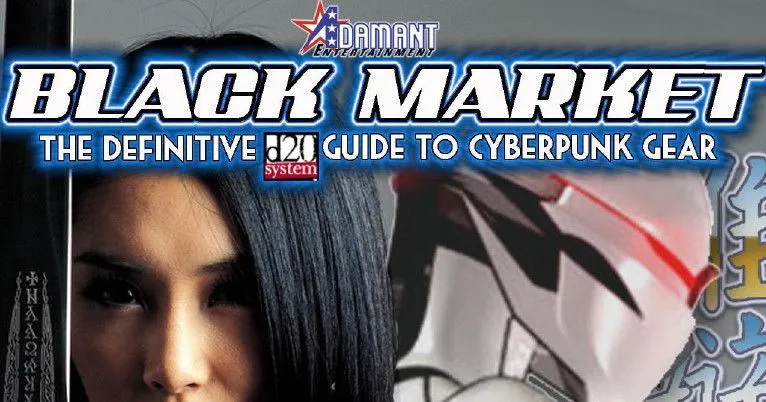
Photo: RPG black market official, via cf.geekdo-images.com
Here's a sentence you never thought would appear in a gaming guide: let them take it.
Across a growing number of modern RPGs, players and dataminers have stumbled onto one of the most counterintuitive design discoveries in recent memory. When you allow certain early-game theft events to play out without intervening — no reloads, no intervention, no chasing the thief down — the game quietly flags your character as a "marked target." And once you're marked, a shadow vendor network opens up. One that sells endgame gear at prices so low they essentially break the entire late-game economy.
It sounds like a rumor. It isn't.
How It Was First Found
The discovery didn't come from a casual playthrough. It came from the datamining community, specifically from players digging into state flag variables after noticing unusual merchant behavior in late-game saves. A variable — quietly labeled in different games under different internal names, but functionally identical in behavior — was being toggled during specific NPC theft sequences. When that flag was active, certain vendor pools populated with items that simply weren't available through any documented progression path.
The first public thread to gain serious traction appeared on a major RPG subreddit when a user posted side-by-side screenshots of two late-game vendor screens from the same title — one from a normal playthrough, one from a run where an early pickpocket event had been allowed to complete. The difference in available stock was dramatic. Gear that normally sat behind dozens of hours of content was sitting on the shadow vendor's shelf at a fraction of the standard market price.
Within 48 hours, the thread had been cross-posted to multiple communities, and the race to replicate the findings across other titles had already begun.
Why Developers Buried It
The short answer is: they probably didn't mean to ship it this way.
The longer answer is more interesting. In several of the affected titles, the theft flag appears to have originated as a narrative or reputation mechanic — a system designed to track whether players had been victimized by the world, potentially as a setup for a questline or a faction relationship that never made it to the final build. The shadow vendor network, in those cases, looks like the remnant of a cut content branch. The flag survived. The story context around it didn't.
In at least two other cases, the mechanic appears more intentional — a genuine hidden system that developers tucked away for players willing to engage with the world on its own terms rather than min-maxing every interaction. Whether it was ever meant to be this accessible, or this powerful, is a different question.
What's consistent across every discovered instance is that no game has documented the mechanic anywhere in official materials. No tooltip. No achievement. No hint system nudge. You either find it, or you don't.
What the Shadow Market Actually Offers
This varies by title, but the pattern is consistent enough to describe in general terms. The shadow vendor networks that unlock through the marked-target flag tend to carry three categories of items:
Underpriced endgame gear. Equipment that sits at the top of normal loot tables, available for a fraction of the standard vendor cost. In some cases, items that don't appear on any vendor table at all under normal conditions.
Consumables with no standard source. Crafting materials, enhancement tokens, and buffs that are either extremely rare drops or locked behind late-game content — available in bulk from the shadow market at mid-game prices.
Placeholder or cut-content items. This is where it gets weird. Several dataminers have flagged items in shadow vendor pools that appear to have no legitimate place in the retail build — items with incomplete stat blocks, missing localization strings, or internal names that reference content that was clearly cut before launch. Whether intentional or not, these items sometimes carry effects that interact with live systems in ways that are, to put it diplomatically, not balanced.
The Gear Progression Problem
Here's why this matters beyond the novelty factor: standard RPG gear progression is built on a specific economic logic. You earn currency, you spend it on gear appropriate to your current stage, you advance. The shadow market doesn't just offer better deals — it fundamentally decouples gear acquisition from progression stage. A player who knows the marked-target flag exists can walk into the shadow market at hour eight of a sixty-hour game and equip themselves for hour fifty.
That's not a shortcut. That's a different game.
For some players, that's exactly the appeal. The speedrunning and challenge-run communities have already incorporated shadow market access into several route optimizations, using the early gear bump to compress mid-game content dramatically. For players who want a more traditional experience, the existence of the system doesn't affect them at all — as long as they don't know about it.
But knowledge spreads. And once a mechanic like this is common knowledge, it changes how the community talks about difficulty, about progression, about what the game actually is.
The Developer Response
Responses have been mixed. Some studios have patched the flag behavior, closing off shadow vendor access and folding any intentional cut-content items into legitimate loot pools or removing them entirely. Others have stayed quiet, which the community has generally interpreted as tacit acknowledgment that the mechanic is either intentional or too low-priority to address.
One studio — declining to be named here because nothing was said on the record — reportedly described the shadow market as "an emergent system that we're monitoring." Whether that means it stays in the game, gets formalized with actual documentation, or gets quietly removed in a future patch is anyone's guess.
What It Means for How You Play
The marked-target mechanic is a good reminder that modern RPGs are vastly more complex under the hood than their surface systems suggest. Developers build contingency flags, remnant systems, and cut-content scaffolding into these games constantly, and the gap between what shipped and what was planned is almost always larger than anyone outside the studio knows.
Players who treat early-game theft events as minor annoyances to be immediately reversed are, in at least some of these titles, closing a door they didn't know was open. Sometimes the most interesting content in these games isn't hidden behind skill checks or locked behind progression gates. Sometimes it's hidden behind the decision to just let something bad happen and see what the world does next.
Let them rob you. See what opens up. You might be surprised what the game has been waiting to show you.