You've been there before. Standing at a crossroads in your favorite RPG, weighing a decision that feels like it could reshape the entire world. Do you spare the corrupt noble or execute him for his crimes? Do you side with the rebels or maintain the status quo? The game presents these moments with dramatic music, lingering camera angles, and dialogue that suggests the fate of nations hangs in the balance.
Then, forty hours later, you discover that both choices lead to essentially the same ending with slightly different window dressing.
Welcome to the world of false choice architecture — the carefully constructed illusion that your decisions matter when, mathematically speaking, they barely register as a blip in the game's predetermined narrative structure.
The Anatomy of Fake Agency
The numbers don't lie, and dedicated community researchers have been crunching them for years. Take The Witcher 3, widely praised for its meaningful choices. Data miners have mapped every decision tree in the game, revealing that despite featuring over 100 "major" story decisions, only about 12 actually influence which of the game's three core endings you receive.
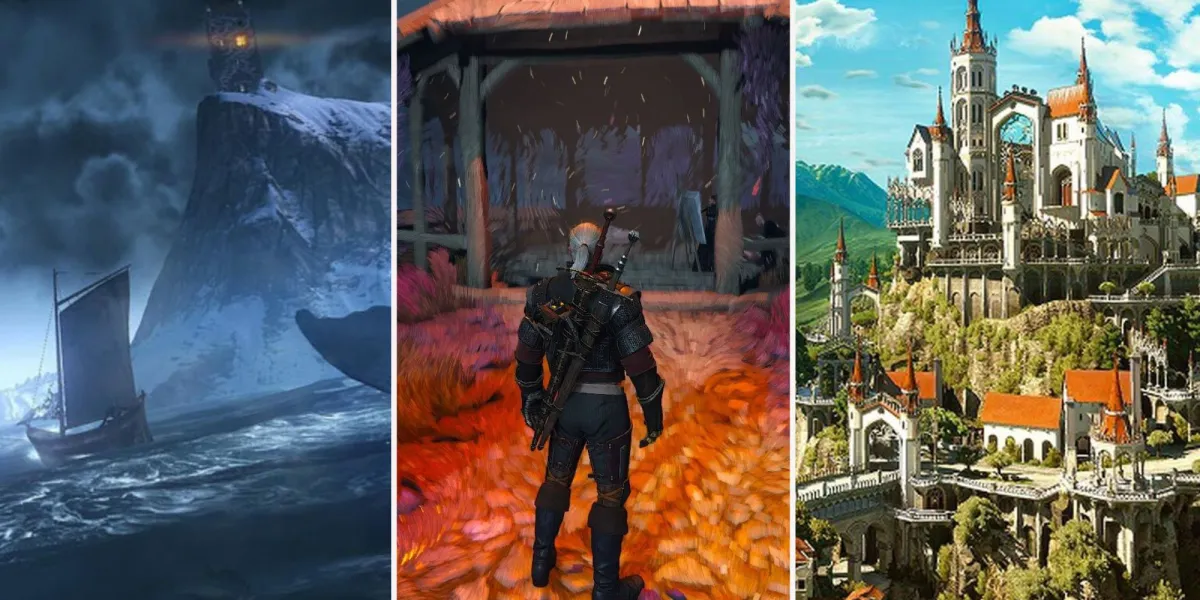 Photo: The Witcher 3, via static1.thegamerimages.com
"Players think they're making 50 different choices that matter," explains DataDruid, a community researcher who's spent three years mapping choice consequences across major RPGs. "In reality, the game is tracking maybe 8-10 variables behind the scenes, and everything else is cosmetic flavor text."
This isn't accidental. It's the result of deliberate design philosophy that prioritizes the feeling of agency over actual narrative branching. Game developers have become master architects of false choice, constructing elaborate decision trees that create the psychological satisfaction of meaningful choice while keeping production costs manageable.
The Budget Reality Behind Branching Narratives
Here's the uncomfortable truth: genuine choice costs money. Every meaningful narrative branch requires additional voice acting, unique cutscenes, different character interactions, and potentially entirely separate gameplay sequences. For a AAA RPG with a $100 million budget, creating truly branching storylines would easily double or triple production costs.
"We call it the 'exponential nightmare,'" says former BioWare narrative designer Sarah Chen (speaking anonymously). "Every real choice that matters creates two paths. Those paths create four paths. Before you know it, you need to create content that 80% of players will never see. The math just doesn't work."
So developers have gotten creative. They've learned to construct what feels like meaningful choice while funneling players toward predetermined outcomes. The trick lies in understanding human psychology — specifically, how players remember and interpret their decisions.
The Psychology of Perceived Impact
The most insidious part of false choice architecture is how well it exploits human cognitive biases. Players naturally want to believe their choices matter, so they'll unconsciously connect unrelated events to decisions they made hours earlier.
Saved a village from bandits in Act 1? When you encounter a thriving town in Act 3, your brain wants to believe there's a connection, even if the developers never programmed one. This phenomenon, known as "choice attribution bias," allows developers to create the illusion of consequence without actually implementing it.
Dragon Age: Inquisition masterfully exploits this bias. The game presents dozens of seemingly crucial decisions about political alliances, but analysis reveals that roughly 70% of these choices only affect flavor text in codex entries and throwaway dialogue lines. The core story progression remains identical regardless of whether you support the mages or templars, choose Cassandra or Vivienne as Divine, or romance Cullen or Dorian.
 Photo: Dragon Age: Inquisition, via static1.thegamerimages.com
The Illusion Techniques
Modern RPGs employ several specific techniques to create false choice architecture:
Delayed Consequences: Present the choice dramatically, then delay any visible outcome by 10-15 hours of gameplay. By the time players see the result, they've forgotten the specific decision context, making it easier to accept minimal changes as "meaningful consequences."
Cosmetic Branching: Create different dialogue options that express the same mechanical choice in various tones. Players feel like they're role-playing their character's personality while making functionally identical decisions.
Consequence Inflation: Use dramatic language and emotional weight to make small changes feel significant. A single line of different dialogue delivered with proper voice acting can feel like a major narrative shift.
The False Dilemma: Present choices as morally complex when they're mechanically simple. The game frames decisions as choosing between competing philosophies while only tracking basic "good/evil" or "order/chaos" variables.
When the Illusion Breaks Down
The false choice architecture only works when players don't peek behind the curtain. But the gaming community has gotten increasingly sophisticated at data mining and choice analysis. Dedicated fans create elaborate spreadsheets tracking every decision and its consequences, often revealing the disappointing truth about narrative illusions.
"The worst part is when you realize how little your 60-hour playthrough actually mattered," says longtime RPG fan Marcus Rodriguez, who maintains a popular choice consequence database. "You replay thinking you'll see a completely different story, but you get 95% identical content with slightly different character reactions."
This revelation has sparked heated debate in RPG communities. Some players argue that the illusion of choice is sufficient — that feeling empowered matters more than actual narrative branching. Others view it as a fundamental betrayal of what RPGs should represent.
The Defenders of Fake Agency
Not everyone sees false choice architecture as inherently problematic. Some industry veterans argue that creating the feeling of meaningful choice is more important than delivering actual consequences.
"Players don't want infinite branching narratives," argues veteran game designer David Kim. "They want to feel like their choices matter within a coherent, well-told story. Sometimes the illusion serves the player better than the reality would."
This perspective suggests that false choice architecture isn't deceptive — it's a compromise between player agency and narrative coherence. By limiting real consequences while maintaining the psychological satisfaction of choice, developers can deliver focused, polished experiences without the exponential complexity of true branching narratives.
The Future of Player Agency
As AI and procedural generation technology advances, some developers are exploring new approaches to player choice. Games like Crusader Kings III and Dwarf Fortress demonstrate how emergent systems can create genuine consequences without hand-crafted narrative branches.
But for mainstream RPGs, false choice architecture likely represents the current ceiling of what's economically feasible. The question isn't whether developers will continue using these techniques — they will. The question is whether players will continue accepting the illusion once they understand how it works.
Breaking the Fourth Wall
Perhaps the most interesting development is how some players are beginning to game the false choice system itself. Communities share guides for "optimal" decision paths that maximize cosmetic variations, treating choice consequences like collectible content rather than meaningful narrative elements.
In a weird way, this represents players taking back agency from the false choice architects — acknowledging the illusion while finding ways to extract maximum value from it anyway.
The promise of meaningful choice remains one of RPGs' most powerful selling points, but the reality behind that promise is far more complex than most players realize. Whether that matters depends on what you're looking for: the feeling of agency, or agency itself.