The Empty Party Run: How Solo Players Are Deliberately Refusing Every Companion in Games Built Around Team Mechanics — And Breaking the Difficulty Curve in Half
In the world of party-based RPGs, there's an unspoken assumption: you're supposed to recruit companions. These games spend dozens of hours introducing potential allies, developing their backstories, and building combat encounters around the expectation that players will field full teams of specialized characters.
But what happens when you just... don't?
That's the question driving the "Empty Party Run" community — a growing group of players who deliberately refuse every companion recruitment opportunity in squad-based games, forcing systems designed around team dynamics to reveal their hidden mechanical shortcuts. The results have been eye-opening, game-breaking, and occasionally hilarious.
The Accidental Discovery
The movement started with a simple challenge run. Streamer "PartyOfOne" was attempting to see how far they could progress in "Dragon Age: Inquisition" using only the protagonist. What began as a difficulty challenge quickly became something more interesting: a systematic breakdown of how party-based games actually function under the hood.
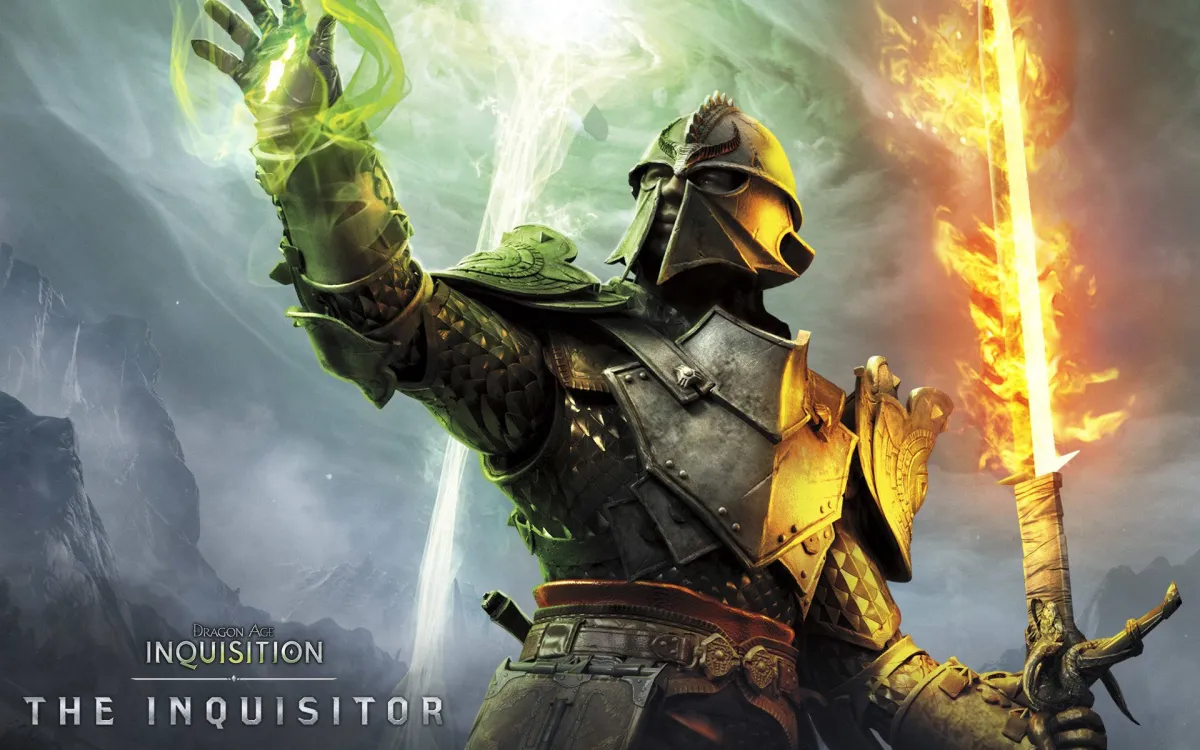 Photo: Dragon Age: Inquisition, via wallpapers.com
"I expected the game to become impossibly hard," PartyOfOne explains. "Instead, I started noticing that certain systems were compensating for my solo status in ways that actually made the game easier in some respects."
The discovery was significant enough that other players began replicating the experiment across different titles. What they found was a consistent pattern: games built around party mechanics often include hidden balancing systems that activate when player party size drops below expected thresholds.
How Games Compensate for Empty Parties
The technical implementation varies by title, but the core concept is universal: when games detect that players are operating with skeleton crews (or no crew at all), they begin applying behind-the-scenes modifications to maintain playability.
In many cases, this takes the form of dynamic difficulty scaling that works in the player's favor. Enemy AI becomes less aggressive when it detects single-target scenarios. Damage calculations shift to account for reduced healing and support capabilities. Some games even modify loot drop rates, providing better equipment to solo players as a form of mechanical compensation.
"Mass Effect" titles, for example, include hidden systems that boost protagonist survivability when companion count is low. Players running with minimal squads receive improved shield regeneration rates and reduced enemy accuracy — modifications that are never mentioned in official documentation but can be clearly observed through gameplay data analysis.
The Loot Scaling Exploit
Where things get really interesting is in how these compensation systems interact with loot distribution mechanics. Many party-based games calculate equipment drops based on expected party size, then distribute those rewards among active party members. When you're running solo, you're essentially receiving loot intended for an entire team.
This creates what the community calls "loot concentration" — a phenomenon where solo players accumulate equipment at rates that far exceed what balanced progression systems intended. Instead of sharing rare drops among four party members, solo players receive everything directly, often resulting in power levels that trivialize intended difficulty curves.
"Divinity: Original Sin 2" provides a perfect example. The game's loot tables are calculated based on party composition, but when you're playing solo, you receive equipment drops calibrated for a full four-person team. This means solo players can achieve equipment breakpoints much earlier than intended, fundamentally altering how combat encounters play out.
AI Behavior and Tactical Simplification
Perhaps the most surprising discovery has been how dramatically enemy AI behavior changes when facing solo opponents. Systems designed to handle complex party dynamics often fall back on simplified behavioral patterns when presented with single targets.
Enemies that would normally coordinate attacks against multiple party members instead focus all their attention on one target — but without the tactical complexity that would make such focus overwhelming. The result is AI that appears more aggressive but is actually more predictable, creating opportunities for skilled players to exploit positioning and timing in ways that wouldn't be possible with a full party.
"The AI doesn't know how to handle solo players," explains community researcher DataMiner47. "It's programmed to split attention and coordinate against multiple targets. When there's only one target, it basically defaults to 'attack the player' without the sophisticated tactical planning that makes party-based encounters challenging."
Resource Management Revolution
Empty party runs also revolutionize resource management in unexpected ways. Items typically shared among party members — healing potions, mana restoratives, temporary buffs — become exclusively available to the solo player. This creates resource abundance that can completely negate the attrition-based difficulty many of these games rely on.
Additionally, many party-based games include resource regeneration mechanics designed to prevent parties from becoming completely depleted. When these systems are focused on a single character instead of distributed across a team, they can provide regeneration rates that approach game-breaking levels.
Community Growth and Documentation
What started as isolated challenge runs has evolved into a legitimate speedrunning and optimization community. Players are maintaining detailed guides for "companion avoidance routes" — optimal paths through games that minimize mandatory party recruitment while maximizing access to solo-specific benefits.
The community has identified dozens of titles where empty party runs provide mechanical advantages over traditional playstyles. Some games become genuinely easier when played solo, while others unlock hidden progression paths that were never intended to be accessible.
Forum threads dedicated to empty party strategies now include frame-perfect timing guides for avoiding companion recruitment triggers, optimal skill builds that account for solo-specific bonuses, and detailed breakdowns of which encounters become trivial when AI systems can't handle single-target scenarios.
Developer Response and Design Evolution
The most interesting aspect of this phenomenon is how developers are responding. Rather than patching out these systems, many studios are embracing them as legitimate alternate game modes. Recent titles include official "lone wolf" difficulty options that formalize many of the mechanical benefits that empty party runners discovered through experimentation.
"We realized that some players genuinely prefer solo experiences, even in games designed around party mechanics," explains lead designer Sarah Chen. "Instead of fighting that preference, we're building systems that support it while maintaining the intended challenge level."
This represents a significant shift in how party-based games approach player choice. Instead of assuming all players want the same social, team-building experience, developers are recognizing that some players prefer the mechanical purity and personal achievement that comes with solo play.
The Philosophy of Going Alone
Ultimately, empty party runs represent more than just mechanical optimization — they're a statement about how different players want to engage with game systems. While some players enjoy the social dynamics and tactical complexity of party management, others prefer the clarity and personal responsibility that comes with solo play.
The fact that these games can be successfully played solo, often with mechanical advantages, suggests that the underlying systems are more robust and flexible than their party-focused presentation implies. It's a reminder that the most interesting discoveries in gaming often come from players who refuse to accept the rules as presented and instead ask: "But what if I just... didn't?"
For players willing to walk the path alone, empty party runs offer some of gaming's most satisfying challenges — proving that sometimes the best team is no team at all.