The Betrayal Ending Economy: How Players Are Deliberately Tanking Their Reputation Scores to Access Merchant Tiers That Rewarded Players Were Never Supposed to See

Here's a question that's been keeping me up at night: What if being the bad guy is actually the optimal strategy?
I'm not talking about roleplay preferences or narrative choices. I'm talking cold, hard numbers. Across a growing list of RPGs with morality systems, players are discovering that deliberately tanking their reputation scores — becoming the absolute worst version of their character — unlocks merchant inventories, quest rewards, and entire economic systems that dwarf anything available to traditional "good guy" playthroughs.
Welcome to the betrayal ending economy, where virtue is a luxury and villainy pays dividends.
The Morality Tax Nobody Talks About
Let's start with the uncomfortable truth: most morality systems in games punish good behavior. Not intentionally, and certainly not obviously, but the math doesn't lie. When you choose the righteous path, you're typically trading immediate material benefits for long-term narrative satisfaction. You save the village instead of robbing it. You spare the merchant instead of taking his entire inventory. You honor your contracts instead of betraying your allies for better loot.
For years, players accepted this as the natural order. Good guys get good endings, bad guys get good gear. It seemed like a fair trade-off.
Then the data miners arrived.
Hidden Vendors and Shadow Markets
What the community discovered was shocking in its scope. Games weren't just offering alternate dialogue for evil characters — they were running entire parallel economies. Vendors that only appear when your reputation hits rock bottom. Black market merchants who stock endgame equipment exclusively for players with maximum negative karma. Underground economies that operate on principles completely divorced from the main game's progression systems.
Take the recent discovery in "Crimson Oath," where players found that achieving maximum infamy unlocks a hidden district populated entirely by criminal NPCs. These vendors don't just sell different items — they sell objectively superior items. Weapons with higher damage values, armor with better defensive stats, consumables that provide bonuses unavailable anywhere else in the game.
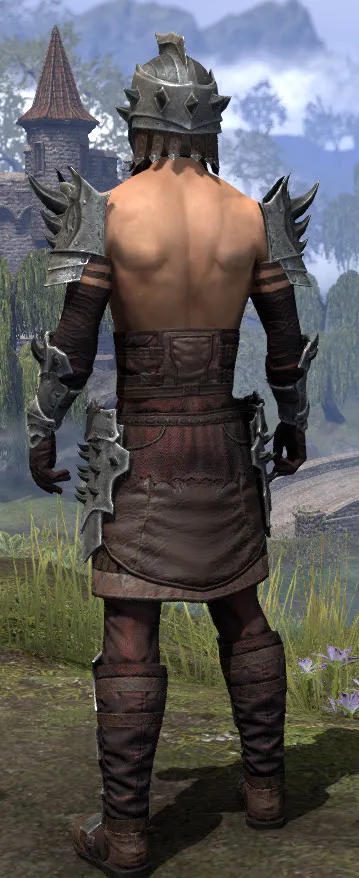 Photo: Crimson Oath, via eso.mmo-fashion.com
The kicker? The developers clearly intended this content to exist. These aren't oversight or balancing errors — they're fully voiced, professionally animated, completely integrated systems that just happen to be locked behind behavior most players would never consider.
The Psychology of Artificial Morality
This raises uncomfortable questions about how we approach choice in games. Are we making decisions based on our actual preferences, or are we being unconsciously guided by assumptions about how games "should" work?
The evidence suggests the latter. When presented with morality systems, most players default to heroic choices not because they necessarily want to, but because decades of gaming have taught us that good behavior leads to good outcomes. We've been conditioned to see evil choices as "content we're missing" rather than "alternate progression paths."
But what if that conditioning is wrong? What if developers have been building robust reward structures for villainous behavior, and we've just been too polite to explore them?
The Numbers Game
Let me be clear about what we're discussing here. This isn't about slight variations in equipment or cosmetic changes to dialogue. Players documenting these systems are finding meaningful mechanical advantages that fundamentally alter how the endgame plays.
In "Shadow Kingdoms," evil characters gain access to a crafting system that allows them to combine stolen goods into unique equipment sets. These sets provide stat bonuses that are mathematically impossible to achieve through legitimate means. A pure evil playthrough can reach damage output levels that are 30-40% higher than equivalent good character builds.
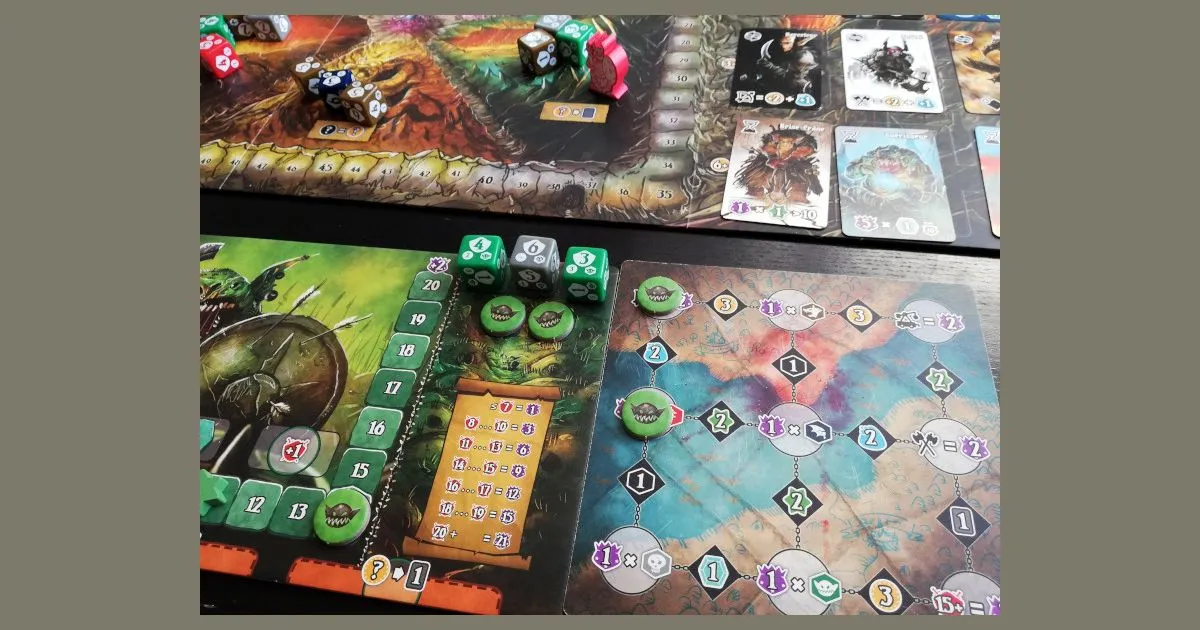 Photo: Shadow Kingdoms, via cf.geekdo-images.com
Similarly, "Broken Crown" features a reputation system where maximum negative standing unlocks assassination contracts that pay exponentially more than traditional quests. Players who embrace villainy can accumulate wealth at rates that make honest merchants look like they're playing a completely different game.
 Photo: Broken Crown, via brokencrowncomic.thecomicseries.com
Community Response and Moral Panic
The response from the broader gaming community has been... complicated. Traditional RPG forums are filled with players expressing genuine distress at these discoveries. There's something psychologically uncomfortable about learning that the "wrong" choice was actually the optimal choice all along.
Some players argue these systems represent poor design — that games shouldn't reward antisocial behavior with superior mechanical benefits. Others contend that this is exactly how morality systems should work: meaningful choices require meaningful consequences, and if good behavior doesn't come with genuine costs, then the choice isn't really meaningful.
The speedrunning community, predictably, has embraced these discoveries with enthusiasm. Evil speedruns are becoming a legitimate category, with runners competing to see who can tank their reputation most efficiently while maximizing access to hidden reward tiers.
Developer Intent vs. Player Discovery
What's particularly interesting is how developers are responding to these discoveries. Rather than patching out the systems or rebalancing the rewards, most studios are doubling down. Recent updates have actually expanded these hidden economies, suggesting that developer intent aligns with player behavior.
This represents a fundamental shift in how RPGs approach player choice. Instead of treating morality as a binary system with predetermined "correct" outcomes, developers are building robust support systems for players who want to explore the full spectrum of character behavior — including behavior that would be unacceptable in real life but fascinating to explore in a consequence-free virtual environment.
The Future of Virtual Villainy
As these systems become more widely known, we're seeing a cultural shift in how players approach RPGs. The assumption that heroic behavior leads to optimal outcomes is being challenged by hard evidence that villainy can be not just viable, but superior.
This isn't necessarily a problem. Games are fantasy spaces where we can explore aspects of human behavior that would be destructive in real life. If developers want to reward players for exploring the darker aspects of their virtual worlds, that's a legitimate design choice.
But it does force us to confront an uncomfortable question: If being good in games requires sacrificing mechanical advantages, are we choosing virtue, or are we just choosing inefficiency?
The betrayal ending economy suggests that maybe, just maybe, it's time to embrace our inner villain — at least when the rewards are this good.